
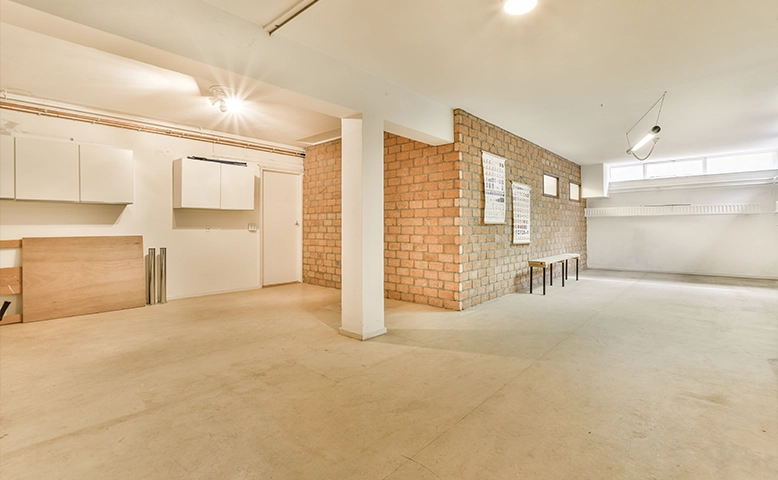
Most basements start similarly. They feel cold, dark, and uncared for. Your house may hold old boxes, paint cans, and holiday decorations. Yes, that happens. Start with the basics, and your basement can become one of the house’s best spaces. You don’t need much money or creativity. A clear plan, a dry room, better light, and smart choices will keep people there. Imagine building comfort piece by piece. Fix it first. Then add warmth, storage, and soft details. The basement becomes more like a room in your home over time.
Fix Water Problems Before You Do Anything
Before buying a couch, painting, or putting up a TV wall, check for moisture. Not many realize how crucial this is. If the basement smells musty, feels damp, or has dark wall stains, fix it first. A nice room will lose its appeal if water gets in. Check corners, windows, walls, and floor edges. Also, look outside. Clogged gutters or soil that slopes toward the house can be the real issue.
A few facts are worth knowing. The EPA says indoor humidity should stay between 30% and 50%, and it also says radon can build up in lower levels of a home, especially basements. Testing is the only way to know if radon is present.
Keep this simple:
- Fix leaks before finishing walls
- Use a dehumidifier if the air feels damp
- Test for radon
- Make sure gutters move water away from the house
It sounds basic. It is. But this is the step that saves money later.
Plan The Room So It Feels Natural
Don’t rush through this fun part. Purposeful basements are best. Ask yourself, “What do you want this room to do every week?” You may want a reading nook, play area, guest room, or quiet place to sit after dinner. You can mix uses, but each needs space. Without planning, the room can feel crowded or awkward.
Use a tape measure to measure the room, ceiling, stairs, windows, and low-hanging pipes or ducts. Then sketch a rough layout. Not much. Simple hand-drawn plans are fine. Make the walking paths visible to avoid a closed room. Consider outlets, lamps, and seating. Also, leave utility panels and shutoff valves easy to reach. Nobody wants to move a big shelf to get something important. A good layout makes a room peaceful, useful, and easy to live in. Quiet comfort makes people stay longer.
Pick Warm Floors And Better Wall Layers
If a basement still feels chilly after you clean it up, the floor is often the reason. Concrete holds cold, and your feet notice it right away. That is why flooring matters so much down here. Soft carpet tiles can work well in a family space. Luxury vinyl plank is another smart choice because it handles wear well and is easier to clean. Some homeowners add a subfloor layer first so the finished floor does not sit right on the slab. That can help the room feel warmer underfoot.
Walls matter too. If cold air moves through the basement, comfort drops fast. Sealing small cracks and adding the right insulation can help keep the room steadier in both temperature and feel. The EPA also links moisture control with mold prevention, which is another reason to keep walls dry before covering them up.
A few smart choices here go a long way:
- Put a moisture barrier where needed
- Use materials made for below-grade spaces
- Add rugs in seating areas
- Insulate rim joists if drafts are a problem
This is not the flashy part of the project. Still, it may be the part you feel every single day.
Use Lighting To Change The Whole Mood
Lighting can make or break a basement. Really. A room with poor light feels gloomy even if everything else looks nice. The fix is not always expensive, either. Most basements need more than one overhead bulb in the middle of the ceiling. Try using three layers of light instead: general lighting for the full room, task lighting for reading or hobbies, and soft lighting for comfort. Once you do that, the room starts feeling much more lived-in.
Flush-mount lights are typically easier to use than hanging lights, especially in situations where the ceiling is low. The use of floor lamps is an excellent method for filling in empty corners. When placed on a table, table lamps immediately create a warmer atmosphere. Wall sconces can help, too, if you want light without taking up floor space. Also, make use of the small window that is located in the basement. Be careful not to place heavy furniture on it. In the event that you do not require privacy, you should either use light curtains or not use any curtains at all. The use of mirrors is a straightforward yet efficient method for distributing light throughout a space. Warm bulbs are typically preferable to harsh, bright white bulbs when it comes to lighting a basement. The objective is not to create the impression that the room is a store. In addition to being comfortable and soft, you want it to be appealing to the eye.
Make Storage Smart So Calm Lasts Longer
A cozy basement stays cozy only if clutter stays under control. That is just the truth. Since basements often become the catch-all space in a house, storage needs to be part of the plan from the start. Closed cabinets are great because they hide visual mess. Baskets help with toys, books, and blankets. Storage benches do double duty, which is always useful. Shelves can work too, but open shelves look better when you do not overload them.
Try to separate everyday items from long-term storage. Your movie blankets, board games, books, and extra chargers should be easy to reach. Old tax papers and holiday boxes can go in another zone. Keep cardboard off the floor if moisture has ever been a problem. Plastic bins are often safer for basement storage. Also, label things clearly. It sounds boring, I know, but labels save time and stop the room from slowly turning back into a storage dump.
Quick facts worth remembering:
- The EPA says keeping humidity in the 30% to 50% range helps reduce moisture problems indoors.
- Lower-level rooms should be checked often for damp air, especially after heavy rain.
When storage is handled well, the whole room feels lighter. And that feeling lasts.
A Basement Your Family Will Actually Use
It’s not about completely filling a basement with stuff. It is important that the room be warm, dry, cozy, and joyful. The first step is to address the issues with the moisture. Organize the way things will appear. The floors should be warmer, the lights should be softer, and the storage should conceal any messes that may occur. After that, the room is going to be ready for the real world. If you need assistance with general contracting, roofing, or gutter cleaning, Harmony Home For Everybody is here to assist you. From the beginning to the end of the task, it may be simpler if you have the appropriate assistance.